 Coming Soon
 Coming Soon
 info@epluseurope.org




How to Find a “Sending Organization” for the European Solidarity Corps (ESC) – E+Europe
In this post, I’ll explain how to find a “Sending Organization” for the European Solidarity Corps (ESC). In my previous post, I discussed how to register on the European Solidarity Corps (ESC) platform.

A Brief Overview of the ESC Program:
The ESC program provides an opportunity to volunteer in various projects across European countries. It does not require language proficiency, which allows participants to contribute both individually and to the member countries through the projects. You can click here to learn more about the program.
So, How Can You Find a Sending Organization?
To participate in projects, it is essential to find a “Sending Organization.” Without one, you cannot participate in the program. But don’t worry! Many universities, NGOs, and even municipalities in Turkey take on this role. The key point is to do your research.
Note: While searching for projects, simultaneously look for a sending organization. You will need both at the same time. As you read through the rest of this post, everything will become clearer—don’t worry. If you’re ready, let’s get started.
Finding a Sending Organization:
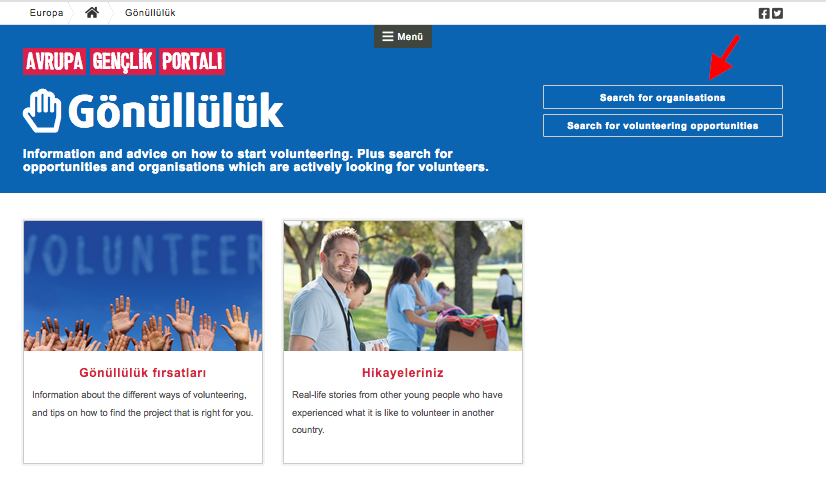
- Go to the European Youth Portal website. You can access the site by clicking here.
- Click on the “Volunteering” section.
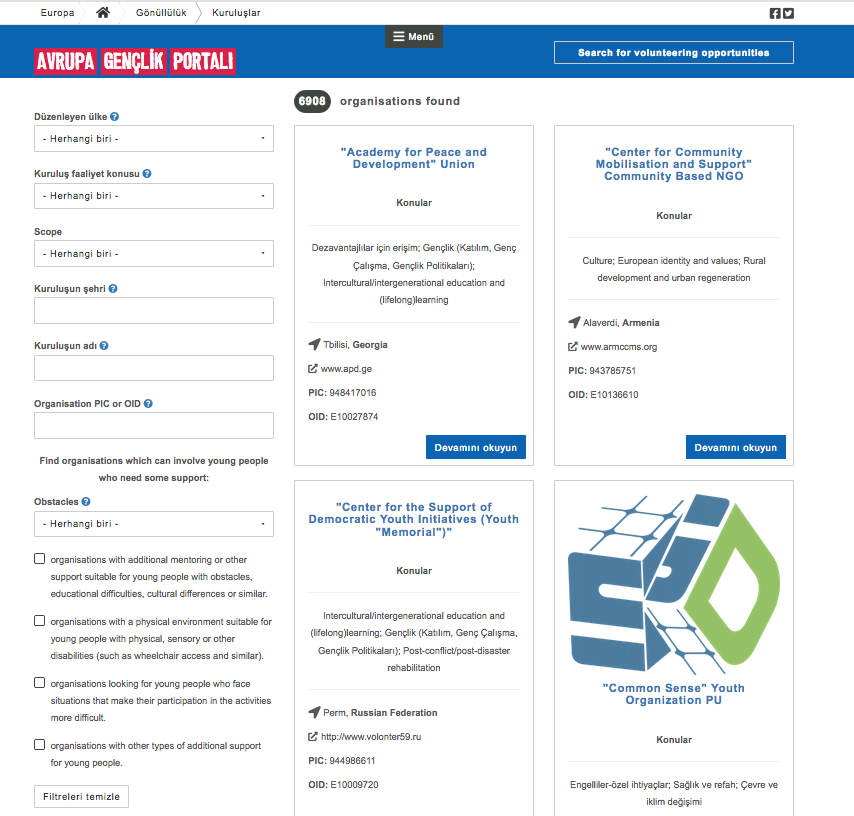
- In the top right corner, click on ‘Search For Organizations.’
- Enter your country in the first section.
- Select the area of activity you want to participate in (e.g., Culture, Digital Skills, Financial Affairs, etc.).
- From the “Scope” section, you can choose either volunteering or professional options to view various organizations.
- Change the topics to select different organizations.
- The sending organization will ask for your CV and questions like why you want to participate in the projects.
Tips for CV and Motivation Letter:
- As mentioned above, prepare your CV in Europass format.
- Clearly state your language proficiency. (While most countries do not require language proficiency, some may ask for specific levels.)
- Including a photo taken within the last six months in your CV can be beneficial.
- You can submit your motivation letter either in video or written form. You can click here to read my post on “How to Write a Motivation Letter.” Important: Sometimes there can be issues with video submissions. Preparing a written text alongside the video can be advantageous.
- It’s important to express yourself well in your motivation letter. Why do you want to participate in the project? (You can explain this based on the project you choose.) Think about headings like your previous experiences (if any, related to similar topics), the benefits you can bring to this project, and how it will benefit you. (The language should be English, and if you have difficulties, you can seek help from those around you.)
Important Points to Consider:
- When researching projects, carefully examine whether the project description is sufficient. (Pocket money, food and transportation allowances, language requirements, etc.)
- If food is provided where you stay, you might not receive a food allowance. If you cannot get food from the place you are staying, they might give you a sum when you arrive, or you can document your food expenses and receive a specific amount at the end of the process.
- Transportation is a crucial point. Is any transportation card provided? Or do they give you an allowance for this? Do they cover your travel to and from the project country? This can vary from country to country and project to project. Research is necessary.
- Language: Some projects offer free language courses (which can also be online). You need to check the project details.
- Most projects do not require language proficiency, but some countries may require a certain language level. Research is necessary.
- You can apply to more than one project while doing your research, and you can make your choice by paying attention to the points I mentioned above.
- Weekends are considered holidays in the projects. Besides this, you also have the chance to take 2 more days off. (You can choose these days according to the suitable time for the project you are working on.)
- During the project phase, you can contact people who have been to or might be going to the places you plan to visit to gain more information.
- In some cases, there can be issues with pocket money, food, and transportation allowances. Therefore, when you contact the project countries, it’s important to pay attention to how quickly they respond and whether your questions are answered.
I hope my post on “How to Find a Sending Organization for the European Solidarity Corps (ESC)” has been helpful for you. You can find a sending organization for the program as mentioned above. Thank you for reading until the end. I hope you reach the project and country you’ve been dreaming of. Feel free to leave your questions and comments in the comment section.
So, what are you waiting for? Remove the obstacles you’ve set for yourself and hit the road when the time comes.
Click HERE to subscribe to our Telegram Channel.
You can get help from the Project Application Guide when applying for projects. Click HERE to access it.
